

How to Get Your Business Recommended by ChatGPT
 IbtisamSEO Expert & Developer · 10 min read
To get your business recommended by ChatGPT, you need to be findable in the sources it searches (mainly Bing-powered and OpenAI-crawled web results), readable by OpenAI's search crawler, and described consistently and favorably across your own site, your business profiles, review platforms and third-party lists. ChatGPT recommends the businesses the web already agrees on, so the work is making that agreement easy to find. Nobody can guarantee a mention, but you can make one far more likely.
Key takeaways
- When ChatGPT searches the web, it builds a recommendation from the pages it retrieves. If you're not in those results, you won't be in the answer.
- Allow
OAI-SearchBotin robots.txt. It's the crawler behind ChatGPT search.GPTBotis the training crawler and is a separate decision.- Third-party sources (review sites, directories, "best of" lists, forums) carry more weight for "who should I hire" questions than your own homepage does.
- Put a plain, factual answer to "what do you do, for whom, where, and at what price" at the top of your key pages.
- Measure with a fixed set of prompts run every month, plus ChatGPT referral traffic in GA4. Ignore anyone selling guaranteed placement.
This post is the practical companion to our guide to generative engine optimization, which covers the theory. Here we focus on one question business owners ask us every week: "Why does ChatGPT recommend my competitor and not me?"
How ChatGPT decides which businesses to recommend
ChatGPT answers in two ways, and they need different work.
From memory. With search off, or for questions where it decides not to search, ChatGPT answers from what it learned during training. Well-known brands with years of consistent coverage show up here. A local business founded in 2023 usually doesn't, and there's no quick way to change that. It shifts slowly as the web's picture of you grows.
From a live search. For most "best X near me", "who should I hire for Y" and "X vs Y" questions, ChatGPT runs a web search, reads a handful of pages and writes an answer with source links. OpenAI says ChatGPT search uses third-party search providers (Bing is the one it names) alongside its own crawling and content from partners. That means two practical things:
- Your pages need to be indexed in Bing, not just Google.
- Your site needs to let OpenAI's search crawler in.
Perplexity works similarly with its own index. Google's AI Overviews and AI Mode draw on Google's normal search index. Across all of them, the pattern is the same: retrieve candidate pages, extract the passages that answer the question, and favor businesses that several independent sources describe in the same way.
That last point is what most owners miss. When someone asks "best family dentist in Austin", the model isn't reading only dentists' websites. It's reading review aggregators, local news, directory listings and Reddit threads, and recommending whoever keeps coming up with good things said about them.
Step 1: Let the right crawlers in
You can't be cited by a system that can't read your site. Open yourdomain.com/robots.txt and check what it says about these user agents:
| User agent | Owner | What it does | Recommendation for most businesses |
|---|---|---|---|
OAI-SearchBot |
OpenAI | Crawls pages to surface them in ChatGPT search results | Allow |
GPTBot |
OpenAI | Crawls content that may be used to train OpenAI's models | Your choice; blocking it doesn't remove you from ChatGPT search |
ChatGPT-User |
OpenAI | Fetches a page when a user's request needs it | Allow; OpenAI notes robots.txt rules may not apply to user-initiated fetches |
PerplexityBot |
Perplexity | Indexes pages for Perplexity's search results | Allow |
ClaudeBot / Claude-SearchBot |
Anthropic | Training crawler / search crawler for Claude | Training is your choice; allow search |
Google-Extended |
Not a crawler; a token that controls use of your content for Gemini training and grounding | Doesn't affect AI Overviews, which use ordinary Googlebot | |
Bingbot |
Microsoft | Indexes pages for Bing, which feeds ChatGPT search and Copilot | Allow |
The distinction between search crawlers and training crawlers matters. Plenty of sites blocked GPTBot in 2023 out of copyright concerns, which is a reasonable choice. Some went further and blocked every AI user agent, or blocked everything with a blanket rule, and quietly removed themselves from ChatGPT search. Check for User-agent: * followed by Disallow: /, which blocks everyone.
On Wix, you edit robots.txt from SEO Settings in the dashboard. On WordPress, your SEO plugin or host usually controls it. If your site sits behind Cloudflare or another firewall, also check its bot settings: some security tools block AI crawlers by default, regardless of what robots.txt says.
One more check: if important content only appears after JavaScript runs (prices loaded by a widget, reviews in an iframe), assume AI crawlers won't see it. Put the facts that matter in the page's HTML.
Step 2: Get indexed in Bing
Most businesses set up Google Search Console and never think about Bing. For ChatGPT visibility, Bing matters.
- Create a Bing Webmaster Tools account. You can import your verified sites straight from Google Search Console, which takes a couple of minutes.
- Submit your sitemap and check the indexing report for pages Bing has skipped.
- Use the URL inspection tool on your five most important pages.
Then search Bing for your own brand name and your main service plus city. If you don't appear on Bing, you're unlikely to appear in an answer that relies on Bing results.
Step 3: Make your business an unambiguous entity
AI models reason about entities: a specific business, with a name, a location, a category and attributes. If your details conflict across the web, the model gets less sure about you, and an unsure model recommends someone else.
Make these identical everywhere:
- Business name (exactly; not "Smith Plumbing" in one place and "Smith & Sons Plumbing LLC" in another)
- Address, service area and phone number
- One-sentence description of what you do and for whom
- Categories and main services
- Founding year, team size and credentials, where you list them
Where "everywhere" means: your website, Google Business Profile, Bing Places, Apple Business Connect, LinkedIn, Facebook, Yelp, industry directories and any marketplace profiles.
On your site, add Organization or LocalBusiness structured data with sameAs links to those profiles, and give your About page a plain statement of who you are. Named authors with real bios help too. For a Wix site, most of this is native; our Wix SEO services page explains what Wix generates automatically and what needs custom JSON-LD.
Step 4: Build the reviews and profiles models read
For recommendation questions, reviews do two jobs. They're a ranking signal on the platforms themselves, and they're text the model reads to decide what you're good at.
What helps:
- Volume and recency on the platforms that matter in your category. Google reviews for local businesses; Clutch, G2 or Capterra for B2B services and software; Tripadvisor for hospitality; Avvo for lawyers; Healthgrades for clinicians.
- Specific reviews. "They fixed our tankless water heater same day" tells a model what you do. "Great service!" tells it almost nothing. When you ask for reviews, ask customers to mention the job.
- Responding to reviews. It adds more text about your services to the page and shows the profile is active.
Never buy or fake reviews. Beyond being against platform rules and the FTC's rule on fake reviews, the patterns are easy for platforms to detect and they can sink a profile.
Step 5: Get onto the lists ChatGPT cites
Run your target question in ChatGPT with search on, then look at the sources. For "best [service] in [city]" questions, you'll often see the same kinds of pages: local "best of" roundups, directory category pages, comparison articles and forum threads.
That source list is your outreach plan:
- Directories and roundups. Many local roundups take submissions or update yearly. Make sure your listing exists, is accurate and includes your specialties.
- Comparison and "alternatives" articles in your industry. Offer the author accurate information, a demo or a quote. Some will add you; many won't.
- Industry associations and partner programs. Membership listings are authoritative third-party confirmation of what you do.
- Local press and podcasts. A single article about your business in a local outlet is the kind of independent source models trust.
- Communities. Answer real questions on Reddit, Quora or specialist forums under your own name, without spamming links. AI engines cite these threads constantly.
This is slow, manual work, which is exactly why it separates businesses that get recommended from those that don't. It's also the part of our AI SEO service that takes the most time each month.
Step 6: Write pages that answer the question directly
When ChatGPT reads your page, it's looking for a passage that answers the user's question. Make that passage easy to find.
- Open each key page with a 40–60 word answer: what you do, for whom, where, and roughly what it costs. "We're a family dental practice in South Austin offering checkups, cleanings, Invisalign and emergency appointments, open Saturdays, accepting most PPO plans" is quotable. "Welcome to our practice, where your smile is our passion" is not.
- Publish your prices, or at least starting prices or typical ranges. "How much does X cost" is one of the most common question types, and pages with real numbers get used.
- Create a page per main service with its own clear answer, rather than one page listing everything.
- Add an FAQ written in the words customers use, with direct two-to-four sentence answers.
- Say who you're not right for. Honest fit statements ("we don't do commercial work") make the rest of the page more credible to readers and to models.
- Keep facts current. Old prices and closed locations get cited too, which is worse than not being cited.
If you want the deeper version of this, including what doesn't work (llms.txt, hidden text, mass AI pages), it's in our GEO guide.
Step 7: Measure with prompt tracking
Measurement here is immature, so keep it simple and consistent.
Build a prompt set. Write 20–30 questions a real prospect would ask. Mix the types:
- Category: "best commercial roofer in Dallas"
- Problem: "who can fix a leaking flat roof on an office building"
- Comparison: "[your company] vs [competitor]"
- Branded: "is [your company] any good"
Run them monthly in ChatGPT with search on, Perplexity, Google AI Mode and Gemini. Use a logged-out or fresh session where you can, since personalization and memory affect answers. Record three things per prompt: are you mentioned, are you recommended, and is what it says about you accurate. Note which sources were cited.
Watch referral traffic. In GA4, filter sessions by source for chatgpt.com, perplexity.ai, gemini.google.com and copilot.microsoft.com. ChatGPT usually adds utm_source=chatgpt.com to the links it shows, which makes these visits easier to spot. AI Overviews clicks arrive as ordinary Google organic traffic and can't be separated in GA4.
Expect noise. The same prompt can give different answers an hour apart. Look at the trend across a few months, not a single run. Paid tools that track AI mentions at scale are useful for larger brands; treat their scores as directional.
What to expect, honestly
- Timelines are months, not weeks. Crawl and index fixes can show up quickly. Reviews, mentions and entity consistency take a quarter or more to register.
- Local and niche businesses have an advantage. "Best Wix developer for Velo integrations" has far fewer credible candidates than "best web design agency", so focused businesses get recommended sooner.
- There's no paid placement in organic answers, and no one can guarantee a recommendation. Engines change their retrieval regularly, and answers vary between sessions.
- Everything here also helps regular SEO. Bing indexing, clear answers, reviews and citations from other sites are all things Google rewards too, so none of the effort is wasted.
How Wix Engine can help
Our AI SEO and GEO service does this work for you: a crawler and robots.txt audit, Bing and Google indexing checks, entity and structured data cleanup, rewrites of your most important pages so they answer first, a reviews and mentions plan, and a monthly prompt-tracking report showing where you're recommended, where competitors are and what changed. It's included in our SEO services plans, or available on its own from $350/month. We promise process, transparency and honest reporting, never a guaranteed spot in an AI answer.
FAQ
Can I pay to be recommended by ChatGPT?
Not in the organic answers. Recommendations come from what ChatGPT finds and has learned about your business, so the only route is improving your visibility and reputation across the web. Be wary of anyone selling guaranteed ChatGPT placement; nobody controls what the model says.
Should I block GPTBot?
That's a business decision about whether your content can be used to train OpenAI's models. Blocking GPTBot doesn't remove you from ChatGPT search, which uses OAI-SearchBot. If you want to be recommended, make sure OAI-SearchBot and Bingbot are allowed, whatever you decide about training.
How long does it take to show up in ChatGPT answers?
Technical fixes such as unblocking crawlers and getting indexed in Bing can show up within a few weeks. Building reviews, third-party mentions and a consistent entity usually takes three to six months to register in answers. Track a fixed set of prompts monthly so you can see the trend rather than guessing.
Does ChatGPT use Google or Bing?
OpenAI says ChatGPT search uses third-party search providers, naming Bing, plus its own crawler (OAI-SearchBot) and content from partners. Being indexed in Bing is the practical takeaway. Google's own AI features, AI Overviews and AI Mode, use Google's search index instead.
Why does ChatGPT say wrong things about my business?
Usually because outdated or conflicting information exists somewhere it reads: an old directory listing, a stale price on your site or a review describing a service you no longer offer. Find the sources it cites, correct what you control, and make your own pages state the current facts clearly. Wrong answers tend to fade as the sources are fixed.
Ibtisam
SEO Expert & Developer at Wix Engine
Runs technical SEO, AI search optimization and site audits at Wix Engine.
Keep reading
All articles → SEO & Marketing
What Is Generative Engine Optimization (GEO)? A Practical Guide
Generative engine optimization explained: how ChatGPT, Perplexity and Google AI Overviews pick sources, what works in 2026, and how to measure it honestly.
· 10 min read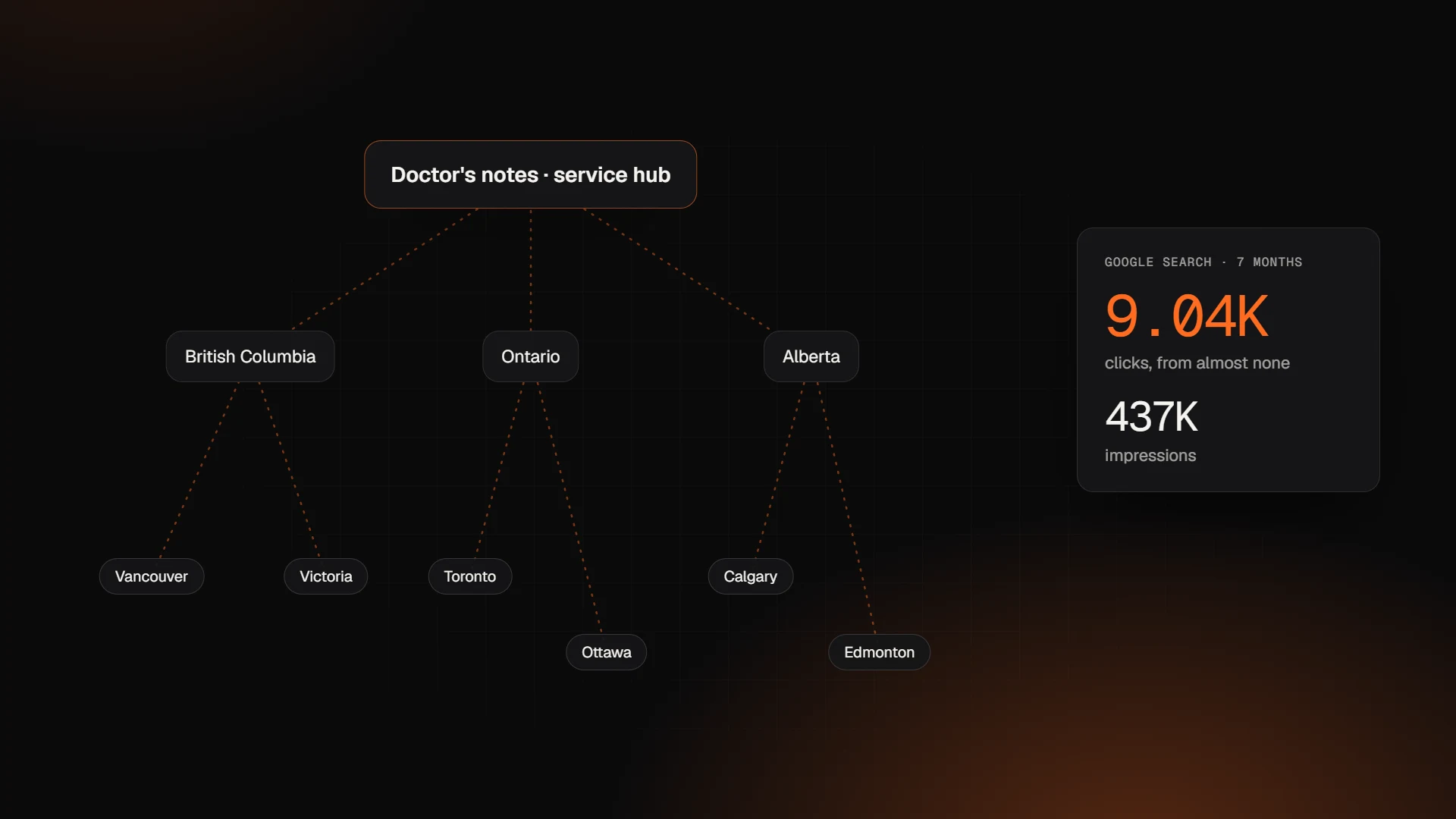 SEO & Marketing
Wix Local SEO: How to Rank in Many Cities Without Thin Location Pages
Wix local SEO case study: the province and city pages we built on Wix that took a site from almost no Google traffic to 9K+ clicks in seven months.
· 9 min read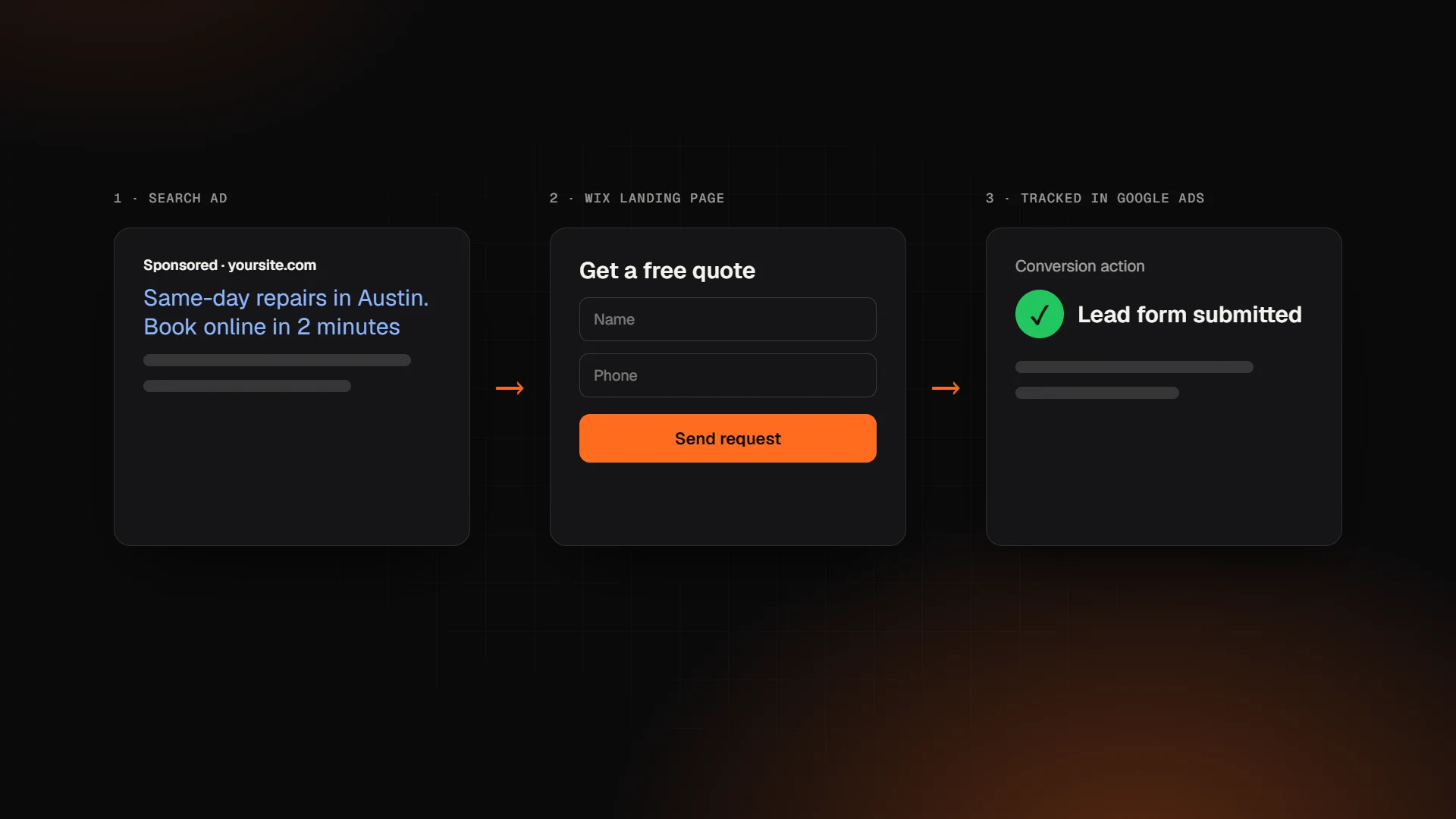 SEO & Marketing
Google Ads for Wix: How to Run Ads for Your Wix Website (2026)
Google Ads for Wix in 2026: Wix's built-in ads vs your own account, conversion tracking with the Google tag, PMax vs Search, budgets and common mistakes.
· 10 min read
Want an expert to look at your project?
Book a free 30-minute call with the Wix Engine team. You'll get honest advice and a detailed proposal within 24 hours.