

What Is Generative Engine Optimization (GEO)? A Practical Guide
 IbtisamSEO Expert & Developer · 10 min read
Generative engine optimization (GEO) is the practice of making your business and content more likely to be used, cited and recommended by AI answer engines such as ChatGPT, Google AI Overviews and AI Mode, Perplexity, Claude and Gemini. It builds on SEO rather than replacing it: AI engines still find most sources through search indexes, but they choose what to cite differently, favoring pages that answer a question directly, state facts that can be checked, and belong to entities the model already recognizes. This guide covers how these systems pick sources, what actually moves the needle, and how to measure it without fooling yourself.
Key takeaways
- GEO is about being cited and recommended inside an AI answer, not ranked on a results page. The two overlap heavily but are not the same.
- Most AI engines retrieve live web results before answering, so you cannot be cited if you do not rank or are blocked from crawling.
- What gets quoted: short, direct answers near the top of a page, specific facts and numbers with a source, clear headings, and consistent business information across the web.
- Third-party mentions (reviews, directories, Reddit, industry publications) matter more in GEO than in classic SEO, because models weigh consensus across sources.
- Measurement is immature. Track AI referral traffic in GA4, test a fixed set of prompts monthly, and ignore anyone promising a guaranteed spot in ChatGPT.
GEO vs SEO: what changed
The term comes from a 2023 academic paper titled "GEO: Generative Engine Optimization," which tested which content changes made a page more likely to be cited by AI answer engines. The practice has since grown into a real discipline, because the way people get answers has shifted.
Classic SEO targets a list of ten blue links. You win by ranking higher. In generative search, the user asks a question and gets a written answer with a handful of citations. Google's AI Overviews now appear on roughly half of search results pages according to Semrush data from 2026, and AI Mode replaces the results page with a conversation. ChatGPT and Perplexity search the web, read a few pages and synthesize.
Three consequences:
- Fewer winners per query. An AI answer cites three to eight sources, not ten links plus ads. Ninth on page one used to earn clicks; now it earns nothing.
- Clicks drop, influence rises. Many AI-answer sessions end without a click. The value shifts to being the business the answer names.
- Selection criteria differ. Ranking first helps but is not sufficient. We regularly see pages ranked fourth or fifth cited over the first result because they answered in a quotable way.
GEO does not replace SEO. A site that does not rank and cannot be crawled will not be cited. Treat GEO as a layer on top of a working SEO foundation.
How AI engines choose what to cite
Each engine works a little differently, but the pattern is similar:
Retrieval. The engine turns the question into one or more searches (Google's index for AI Overviews and AI Mode; Bing and its own crawling for ChatGPT; Perplexity's own index) and pulls a set of candidate pages.
Reading. It extracts the relevant passages. Pages with the answer buried in paragraph nine lose here; pages with a clear answer under a clear heading win.
Synthesis and citation. The model writes the answer and attaches sources to claims, favoring the passage that stated the fact most clearly and the entity it has the most consistent information about.
Recommendations. For "best X for Y" questions, the model draws on what it learned about brands in training and in the retrieved pages. Third-party mentions (reviews, comparisons, directories, forum threads) carry heavy weight here, because the model wants consensus, not a self-description.
What actually works in 2026
Everything below is something we do on our own site and on client sites. None of it is a trick; most of it is what good content always looked like, applied more strictly.
1. Answer first, then explain
Put a 40–60 word direct answer to the page's main question immediately under the H1, before any backstory. This is the passage most likely to be extracted. Every post on this blog, including this one, opens that way. Then add a short "key takeaways" block. Models (and skimming humans) read these first.
2. Structure for extraction
- One question per H2, phrased the way people ask it.
- Short paragraphs. Two to three sentences.
- Tables for comparisons and numbers. Models parse tables reliably and quote them often.
- Lists for steps and options.
- An FAQ section with real questions and 40–80 word answers.
A page built this way is easier for Google, for AI engines and for the person reading on a phone.
3. State specific, checkable facts
"Wix plans start at about $17 per month on annual billing" is citable. "Wix is affordable" is not. Numbers, dates, named sources, version numbers and precise definitions get quoted. Where you have original data (your own project numbers, a test you ran, a survey), publish it; original facts are the single strongest citation magnet because no other page has them.
Be careful with this one: invented or unsourced statistics are worse than none. Models are getting better at cross-checking, and a number that does not match other sources undermines the whole page.
4. Make your entity unambiguous
AI engines reason about entities: a business, a person, a product. Yours needs to be consistent everywhere:
- Same business name, address, phone and description on your site, Google Business Profile, LinkedIn, directories, review platforms and social profiles.
- Organization schema on your site with
sameAslinks to those profiles. - Named authors with real bios, credentials and profile links. Article schema with
authorfilled in. - An About page that states plainly what you do, since when, for whom, and why you are credible.
For a Wix site, the built-in SEO settings and structured data tools cover most of this; our Wix SEO services page explains what is native and what needs custom JSON-LD.
5. Earn third-party mentions
For recommendation queries ("which agency should I hire for…", "best tool for…"), what other sites say about you matters more than what you say. Practical sources:
- Reviews on Google, Clutch, Trustpilot and marketplace profiles (Upwork, Wix Marketplace).
- Listings in relevant directories and partner programs with accurate descriptions.
- Guest contributions and expert quotes in industry publications.
- Genuine participation in communities where your customers ask questions (Reddit, specialist forums). Models cite these threads constantly.
- Comparison and "alternatives" articles on other sites that include you.
This is slow and it is the part most "GEO agencies" skip because it cannot be automated.
6. Stay crawlable by AI bots
You cannot be cited by a system that cannot read you. Check your robots.txt for rules blocking GPTBot, ClaudeBot, PerplexityBot, Google-Extended or similar user agents. Blocking training crawlers is a legitimate choice; just know that some of those bots also feed live answers. Make sure your important pages are indexed in Google and Bing, because AI Overviews draw on Google's index and ChatGPT leans on Bing's.
7. Keep it fresh and dated
AI engines show a strong preference for recent content when the question has a time component ("in 2026", "current pricing", "latest"). Put a visible last-updated date on pages, update facts when they change, and change dateModified only when the content really changed. Stale pricing pages get cited less and, worse, get cited with wrong numbers.
8. Write honest comparisons
Pages that say "X is better for A, Y is better for B" get cited for both. Pages that say "we are the best" get cited for nothing. Including the limitations of your own product or service increases the chance a model treats the page as a trustworthy source. Our Wix vs WordPress comparison is written that way on purpose.
What does not work (or is unproven)
- Keyword stuffing for AI. Models read meaning, not density.
- Hidden text aimed at LLMs. Treated as spam by search engines; AI engines inherit that judgment.
- "llms.txt" files. A proposed standard for giving AI crawlers a site summary. Harmless to add, but no major engine has publicly confirmed it influences citations. Do not pay anyone for it.
- Mass AI-generated pages. Thin content at scale is penalized by Google and ignored by engines looking for original substance.
- Guaranteed placement. Nobody can guarantee a mention in ChatGPT or an AI Overview. The engines change weekly and outputs vary between sessions.
How to measure GEO
This is where honesty matters most, because measurement is immature.
Referral traffic. In Google Analytics 4, build a report or exploration filtered to sessions where the source contains chatgpt.com, perplexity.ai, copilot.microsoft.com, gemini.google.com or claude.ai. The numbers will be small; the trend is what matters. Google AI Overviews clicks appear as ordinary Google organic traffic, so they cannot be separated in GA4; Search Console shows them inside normal search performance.
Prompt testing. Write 20–30 questions a prospective customer would ask, including the branded, comparison and "best X for Y" kinds. Run them monthly in ChatGPT (with search on), Perplexity, Google AI Mode and Gemini. Record whether you are cited, whether you are recommended, and what the engine says about you. Keep it in a spreadsheet. It is manual, it is the most useful data you will have, and it also tells you what competitors are being cited for.
Monitoring tools and brand search. Several tools track AI citations across engines; treat their "visibility scores" as directional, because engine output is not deterministic. Also watch branded impressions in Search Console: if GEO is working, more people search your name after seeing it in an answer.
A 30-day starting plan
- Week 1: foundation. Fix crawlability for AI bots, confirm indexing, add Organization and author schema, align business details across your profiles.
- Week 2: your top 10 pages. Rewrite each to answer first, add key takeaways, convert comparisons to tables, add an FAQ, add a visible updated date, and check every fact.
- Week 3: original content. Publish one piece with data nobody else has: your own numbers, a test, a survey of your customers.
- Week 4: mentions and measurement. Ask recent clients for reviews, update directory listings, answer three real questions in a community where your customers are, and set up the prompt-testing spreadsheet and GA4 report.
Then repeat from week 2 with the next ten pages.
How Wix Engine can help
Our AI SEO and GEO service does the work above for your site: a crawlability and schema audit, rewrites of your most important pages for answer engines, an entity and mentions plan, and monthly prompt testing with a report that shows where you are cited, where competitors are, and what changed. We also build the SEO foundation underneath it when that is missing. We promise process, transparency and reporting, never a position in an AI answer.
FAQ
What is generative engine optimization in simple terms?
Generative engine optimization (GEO) means shaping your website and your presence across the web so AI answer engines such as ChatGPT, Perplexity and Google AI Overviews cite your pages and recommend your business when people ask questions. It adds to traditional SEO: you still need to rank and be crawlable, but you also need direct answers, checkable facts and a consistent, well-known business entity.
Is GEO different from SEO?
They overlap heavily. SEO aims to rank pages on a results page; GEO aims to be one of the few sources an AI answer cites or recommends. GEO places more weight on answer-first structure, specific facts, entity consistency and third-party mentions, and it rewards honest comparisons. Everything that helps GEO also helps SEO, which is why we treat them as one program.
How do I get my business cited by ChatGPT?
Make sure ChatGPT's crawlers can read your site and that your pages are indexed in Bing. Answer the questions your customers ask directly at the top of each page, with specific facts. Keep your business name, description and details consistent across your site, Google Business Profile, directories and review sites. Build genuine third-party mentions. Then test real prompts monthly to see what is working.
Does Google AI Overviews use the same signals as normal search?
Largely. AI Overviews draw on Google's index and ranking systems, then select passages that answer the query directly. Pages that rank well, load fast and answer clearly are the usual candidates, but a clearly written lower-ranked page can be cited over a vague higher-ranked one. Google has said there is no special markup to opt in; good content and standard SEO are the path.
Ibtisam
SEO Expert & Developer at Wix Engine
Runs technical SEO, AI search optimization and site audits at Wix Engine.
Keep reading
All articles →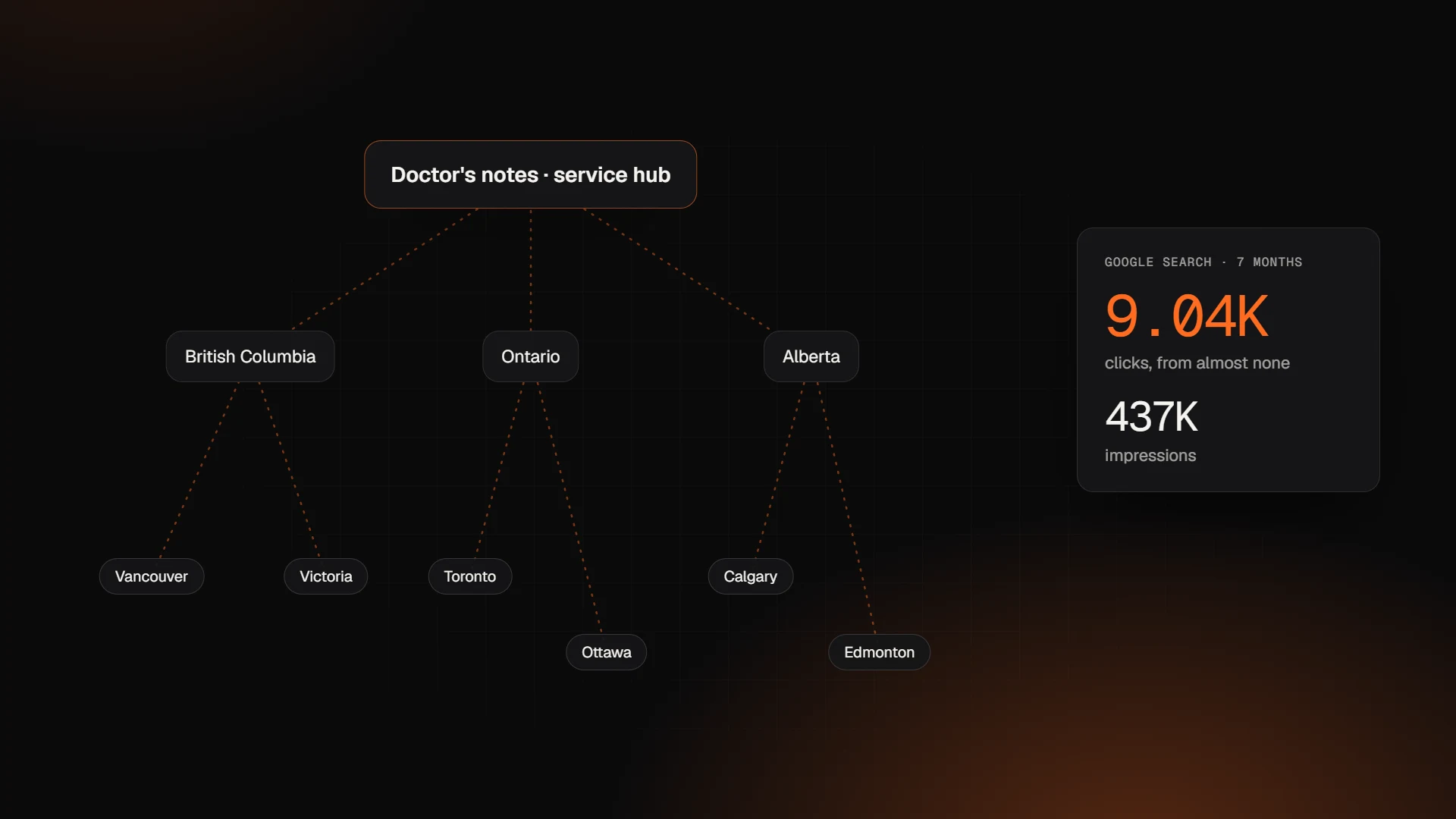 SEO & Marketing
Wix Local SEO: How to Rank in Many Cities Without Thin Location Pages
Wix local SEO case study: the province and city pages we built on Wix that took a site from almost no Google traffic to 9K+ clicks in seven months.
· 9 min read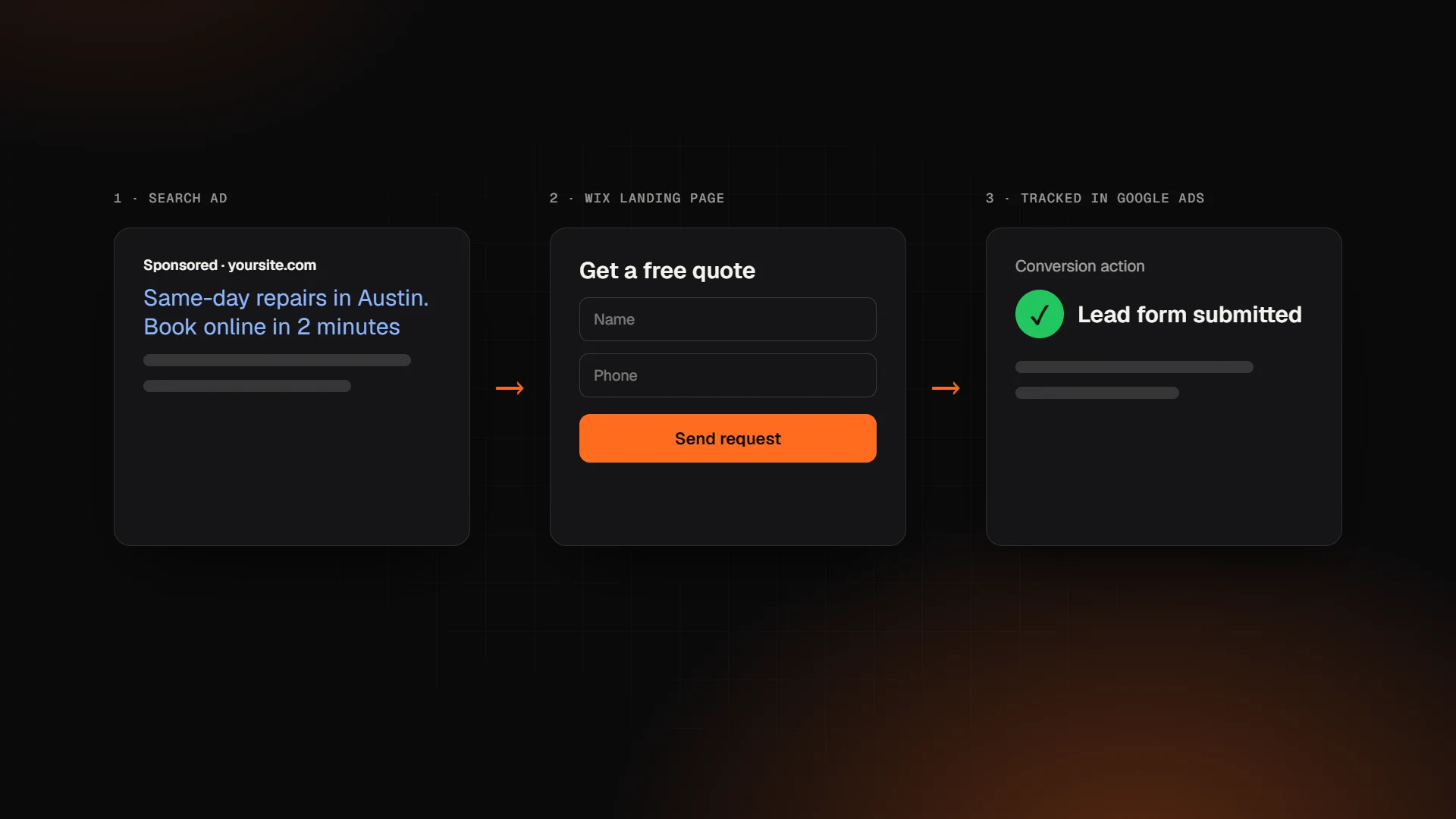 SEO & Marketing
Google Ads for Wix: How to Run Ads for Your Wix Website (2026)
Google Ads for Wix in 2026: Wix's built-in ads vs your own account, conversion tracking with the Google tag, PMax vs Search, budgets and common mistakes.
· 10 min read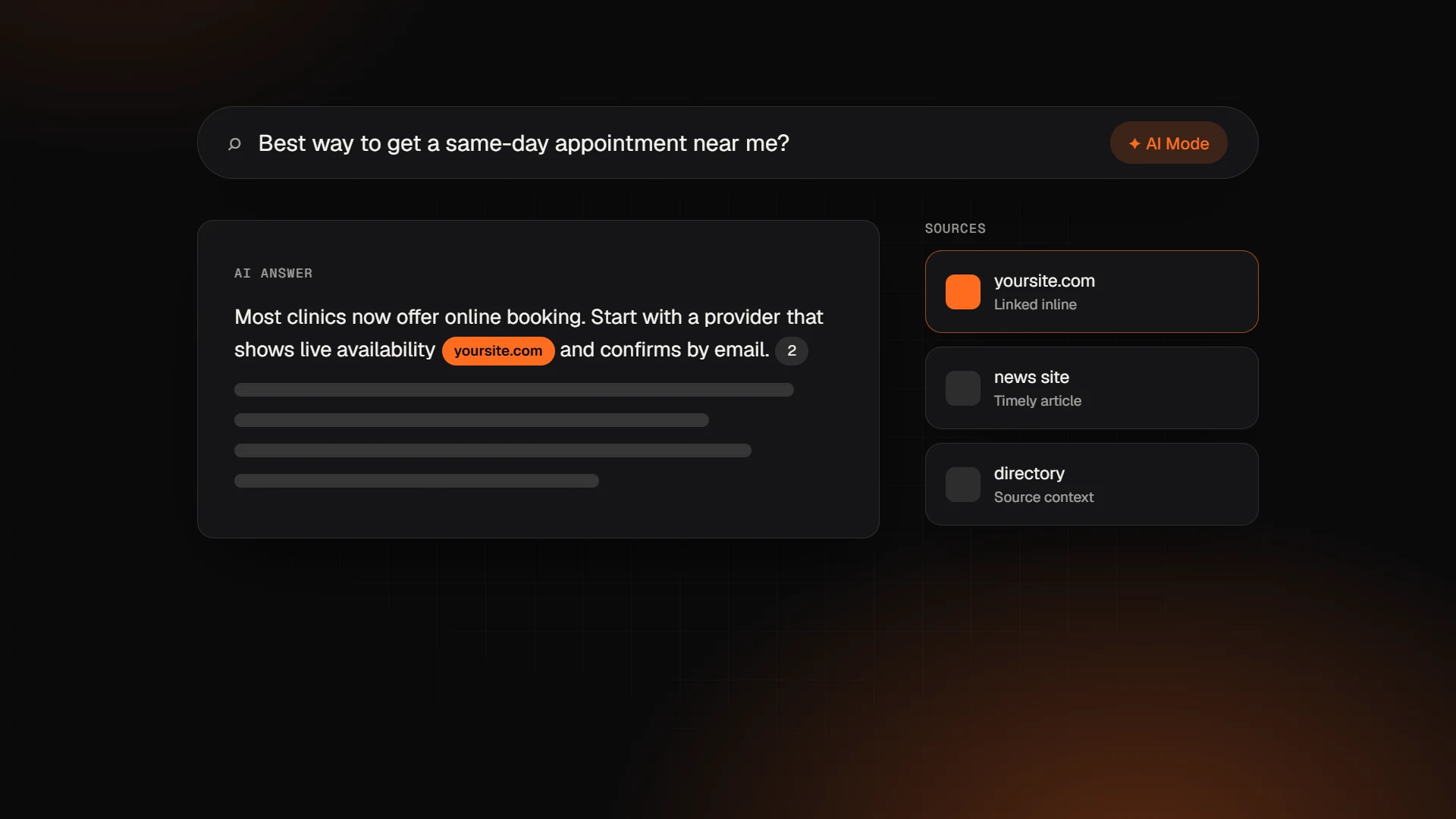 SEO & Marketing
Google AI Mode Update: What the October 2026 Changes Mean for Your Website
The October 2026 Google AI Mode update adds more inline links and a test of official-site links. What changed, what Google says, and how to get cited.
· 9 min read
Want an expert to look at your project?
Book a free 30-minute call with the Wix Engine team. You'll get honest advice and a detailed proposal within 24 hours.